

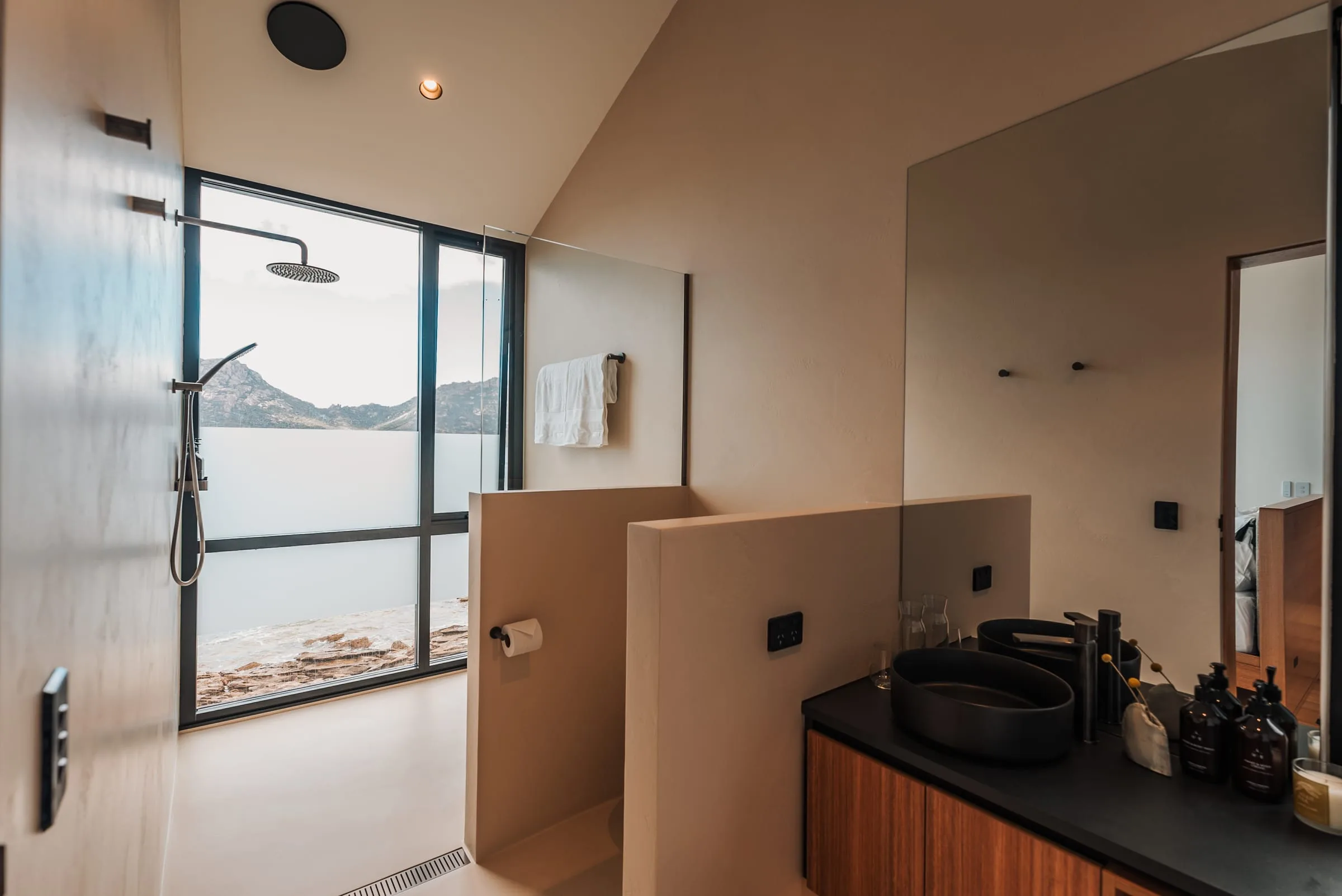
Services · Remote & island builds
When the site decides the programme.
On a difficult site, logistics are not a construction problem to be solved later. They are a design input, and they belong in the first sketch.
In short
The best sites are the hardest to reach.
That is not a coincidence. The land nobody could easily build on is the land that still has the view, the isolation and the silence — and it is the land that punishes a design produced without any thought for how it will physically arrive.
We have built on an island reached by boat and on an exposed headland with no services. What both taught us is the same lesson: on a remote site, the constraint that decides the architecture is rarely the planning scheme. It is the barge, the road, the weather window and where the crew sleeps.
So those go into the first sketch, not the site meeting. Panel sizes that fit the boat. Structure that a small crew can raise. A build sequence that survives a fortnight of weather. It is a discipline, and it is one only a practice holding both the design and the build can genuinely apply.
What changes on a remote site
Five constraints that reach back into the design.
- Every delivery is a decision
- When materials arrive by barge, ferry or a two-hour haul, the delivery schedule stops being administration and becomes part of the design. A sheet that will not fit the boat is a sheet you cannot specify.
- Labour has to live somewhere
- Crew accommodation, travel time and rostering are real line items on a remote job, and they are the ones most often left out of an optimistic budget.
- Services may not exist
- Power, water and wastewater are frequently self-contained. Tanks, treatment, generation and storage are architecture on these sites, not an afterthought bolted on at the end.
- Weather sets the programme
- Exposure decides both the detailing and the calendar. A build that depends on a crossing is a build that plans around the days you cannot make one.
- Getting it wrong is expensive twice
- A missing component on a suburban site costs an afternoon. On an island it can cost a week and a boat. Documentation completeness is not a nicety here.
Built in difficult places
An island, and an exposed headland.
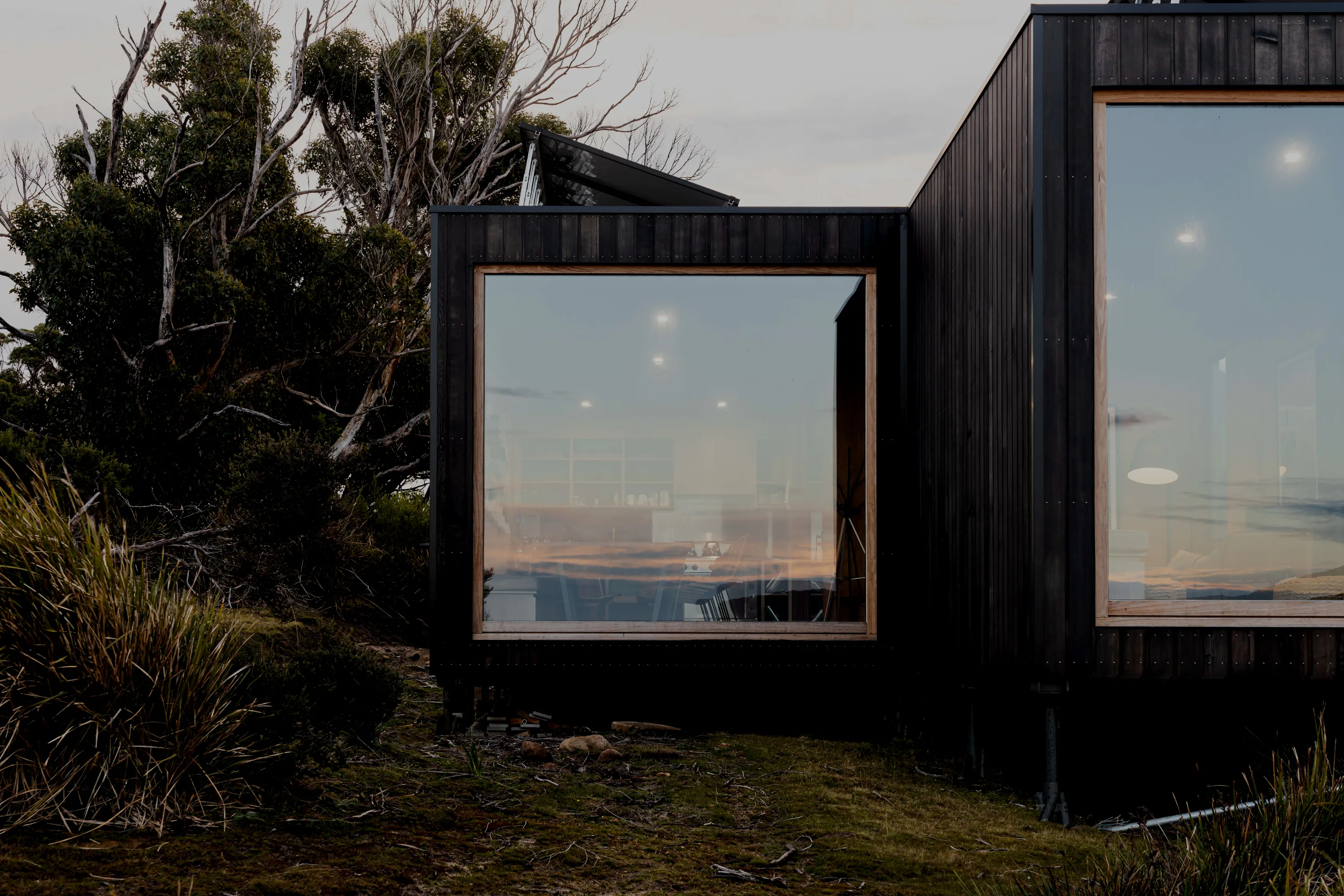
Prefabricated retreat
Standup Point Camp
Tasman Peninsula · 2024
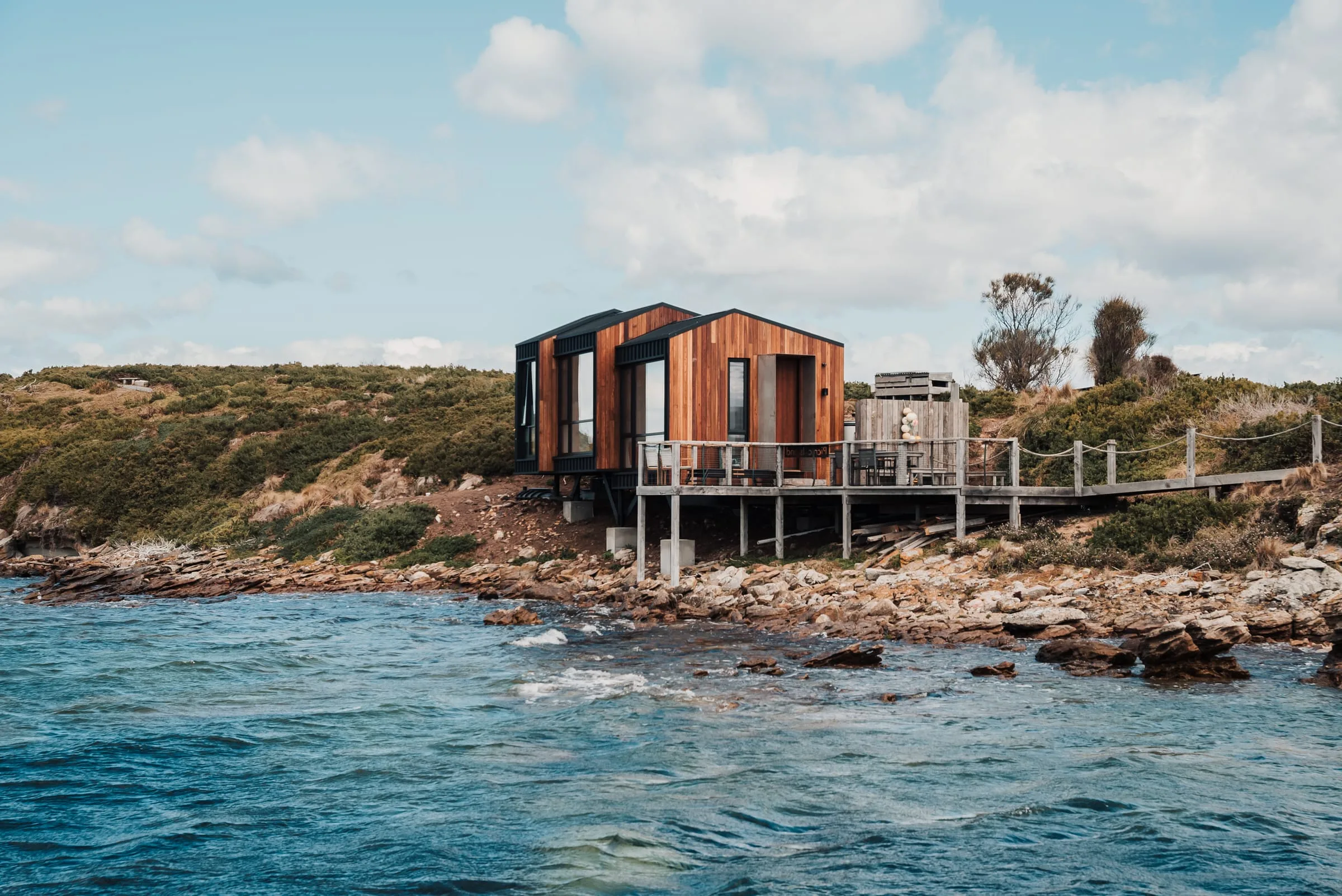
Off-grid retreat
Picnic Island
Coles Bay · 2026
Picnic Island sits off Coles Bay on Tasmania's east coast. Every board, fixing and appliance crossed water to get there. Construction was delivered by Zanetto Builders.
Standup Point Camp holds a stretch of the Tasman Peninsula that gets the full weather. It won a People's Choice architecture award, and it is the image the whole practice is built around.
What it costs
Budget for the crossing, not just the building.
Around 15% is a fair starting premium for a remote or island site before it has been properly assessed — freight, crew accommodation, travel time, plant mobilisation and a genuine weather contingency. Some sites are considerably more, and a few are less than people fear.
The cost calculator has a remote-site toggle so you can see the shape of it now. The number that matters comes out of the pre-build feasibility at sketch design, once someone has physically stood on the site and worked out how everything gets there.
Frequently asked
Remote and island builds — your questions answered.
Do you build on islands and remote sites?+
Yes. Picnic Island off Coles Bay was reached by boat and barge, and Standup Point Camp sits on an exposed stretch of the Tasman Peninsula. Both are completed projects, not proposals, and both taught us more about programme than any suburban block ever has.
How much more does a remote or island build cost?+
Plan on a meaningful premium — freight, crew accommodation, travel time and weather contingency all add up, and around 15% is a reasonable starting assumption before the site is properly assessed. Our cost calculator has a remote-site toggle. The honest number comes out of the feasibility, once the access route is actually understood.
What decides whether a remote site is buildable at all?+
Access, services and the weather window, in that order. We assess all three during sketch design, because a site that cannot take a truck, cannot get power, or only allows a four-month working season changes the design fundamentally rather than marginally.
Can you design something to be prefabricated off site?+
Where the access justifies it, yes — building elements under cover and shipping them complete can be the difference between a viable programme and an impossible one. It has to be decided early, because it changes the structural approach and the module sizes, not just the assembly sequence.
Which remote parts of Tasmania do you cover?+
The East Coast and its islands, the Tasman and Forestier peninsulas, Bruny, and the far North-West. Travel, site attendance and crew logistics are quoted transparently and agreed before anything starts. We do not take remote work on the mainland — the value here comes from knowing these crossings and these weather windows.
Is off-grid the same as remote?+
Not quite, though they usually arrive together. Remote is about access. Off-grid is about services — generation, storage, water capture and wastewater treatment designed as part of the building. Either can happen without the other, and each has its own cost profile.
The towns and regions we work across are on where we build, including the east coast and Bruny Island.
The next step
Start here.
One short conversation about your site, your budget and what you want to build. No fee, no obligation, and a straight answer on whether we are the right practice for it.