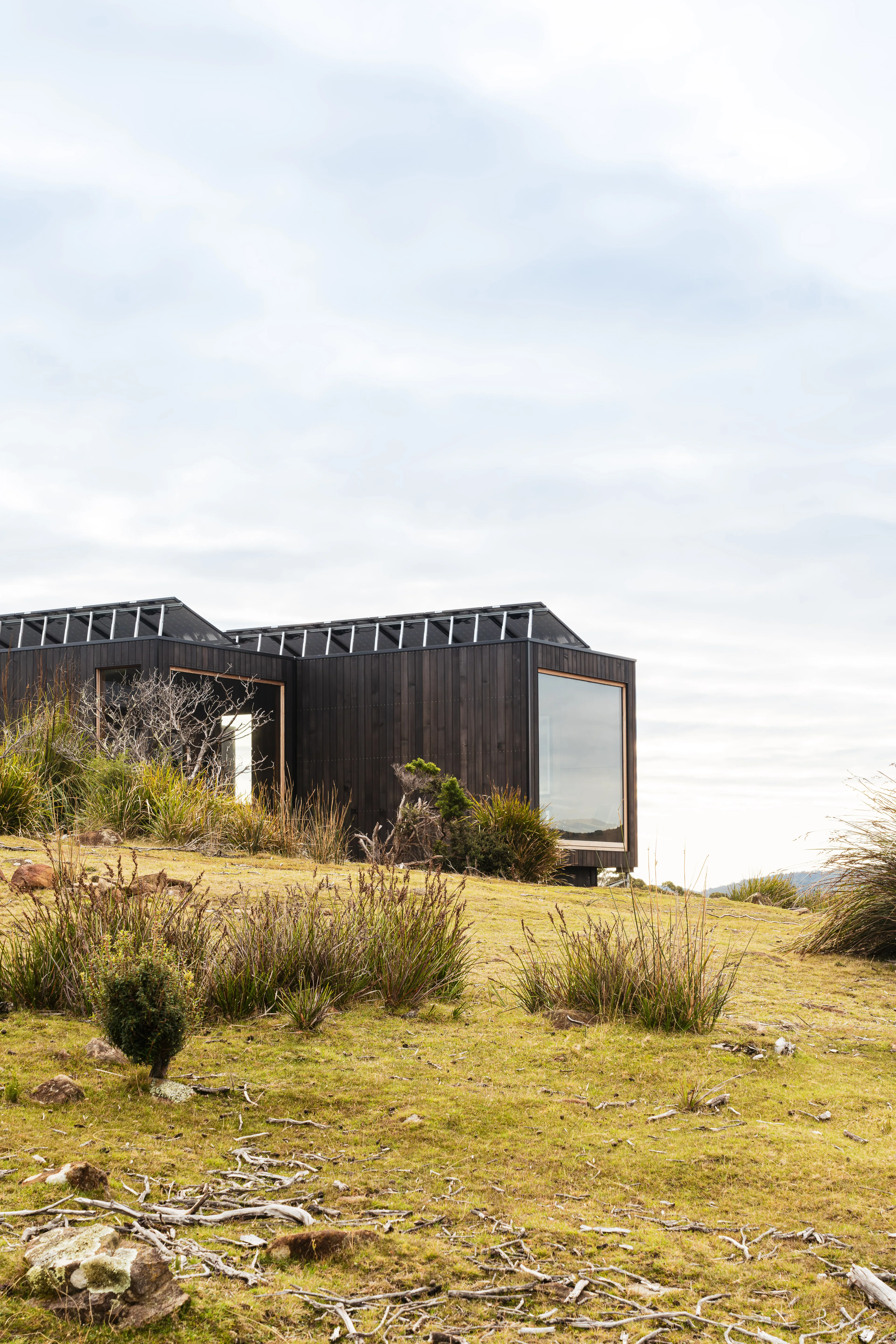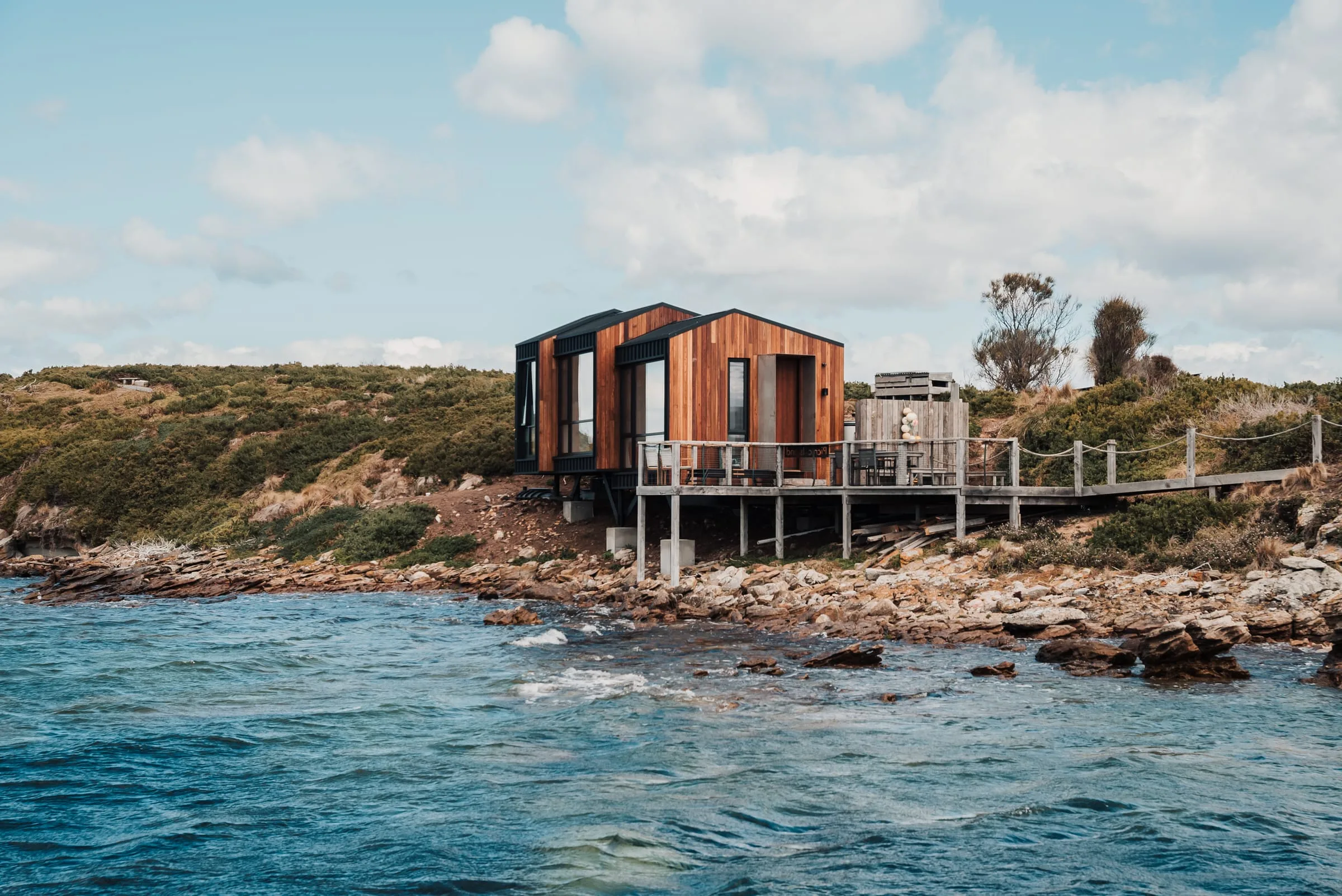

It is the first question almost everyone asks, and it deserves a straight answer rather than a defensive one.
Yes — a dark external surface gets hotter than a pale one in direct sun. A black wall in Tasmanian summer sun can sit thirty degrees or more above air temperature, where a pale wall might sit ten or fifteen above.
And yet: external colour is one of the smallest factors in how warm your house actually gets. Both of those statements are true at once, and the gap between them is where the real answer lives.
What actually decides the temperature
In rough order of impact:
- Glazing — area, orientation, shading and glass specification. Sun coming through glass is a far bigger heat load than sun landing on a wall. An unshaded west-facing window will do more damage on a February afternoon than an entire black facade.
- Insulation — how much, and whether it is continuous or bridged by framing.
- Orientation and shading — where the building sits, and what stops summer sun reaching it.
- Airtightness and ventilation — whether hot air leaks in, and whether you can purge heat at night.
- Thermal mass — what the structure absorbs during the day and releases later.
- External colour — last, and by a wide margin.
The reason colour ranks so low is that a correctly built wall does not pass surface heat straight through. It is a system, not a skin.
The cavity does the work
A modern wall is not a solid thing. Behind the cladding there is a ventilated cavity, then a membrane, then insulated framing, then internal lining.
Air in that cavity heats up, rises, and exits at the top — carrying the absorbed heat with it and drawing cooler air in at the base. The mechanism is entirely passive and it runs hardest exactly when you need it most, because a hotter cavity drives a stronger draw.
Detail that cavity correctly and most of what the dark surface absorbs never reaches the insulation layer. Detail it badly — block the vents, omit the batten space, bridge the cavity with a sloppy junction — and the dark surface becomes a genuine problem.
This is the whole argument in a sentence: dark cladding is not a thermal risk, it is a detailing risk. It punishes poor building, which is precisely why we work in it. See the Elements for how the palette is chosen.
Roofs matter more than walls
If you take one practical thing from this: worry about the roof, not the walls.
A roof receives far more direct solar radiation than a vertical wall, especially in summer when the sun is high. A dark roof therefore contributes considerably more heat than dark cladding does.
It is still entirely manageable — ceiling-level insulation, a ventilated roof space and correct sarking do the job — but it is where the attention belongs.
What we do about it
Every Darkitecture home is designed around the sun before it is designed around the palette. That happens at the Site Reading, where we spend time on the actual site watching where light lands and when, and again at the Silhouette, where glazing is sized, shaded and specified.
Concretely:
- Eaves and reveals sized for the latitude — deep enough to block high summer sun, shallow enough to admit low winter sun
- Glazing specified per elevation, not one product used everywhere
- Continuous insulation with thermal breaks where the structure would otherwise bridge it
- Ventilated cavities detailed properly, and inspected — not assumed
- Airtightness treated as a build target, so night purge actually works
The result is a house that looks severe and lives comfortably. That is the entire point: a dark building that was miserable to live in would be a failed building, however it photographed.
The honest caveat
A dark house built to minimum standard, with unshaded western glass and a bridged cavity, will be hot. So will a white one — it will just be hot slightly later in the day.
Colour is not what saves or ruins a house. Detailing is. If you are comparing builders on a dark home, ask them about cavity ventilation and glazing specification, and see whether they have an answer ready.
If you want to talk through a specific site, that conversation is the Threshold — no fee, and we will tell you honestly whether dark architecture suits your block.